Some people love to get out in the snow for skiing, snowboarding, and other fun activities. Others are content to view the winter wonderland from the comfort of a heated home interior.
What if winter weather is infiltrating your cozy nest? If you have drafts around windows and doors, you may struggle to regulate interior temperatures. Worse, it could be inflating your heating costs.
Before the temperature drops and inclement weather arrives, figure out where drafts are and how to address them. How do you fix a drafty window or door to ensure comfort and minimize heating costs this winter?
Identifying Drafts
There’s no need to stress over the question, “How do I fix drafty windows?” You must simply figure out if you have drafts and where they are. In some cases, you can see offending areas around the edges of window frames if light leaks through.
Or you could gently shake or push the window and see if it rattles in the frame. This would indicate looseness that could be responsible for drafts. However, there are more definitive ways to figure out exactly where leaks are. Here are a few methods for identifying drafts around windows.
Feel It Out
The human hand is a sensory masterpiece. Fingertips, in particular, are equipped with a high concentration of nerve endings (about 3,000 per square inch). This biological gift helps you explore the world through touch and sense even slight temperature changes. Due to this, you can definitely use your hands to help you find drafts.
All you need is a dish of water to get started. Just dip your fingers in the water and hover them around the edges of window frames and panes. You’ll quickly feel colder areas and breezes that may indicate leaks. Once you know where drafts are, you can move on to figuring out how to repair a drafty window.
Light a Candle
Another way to seek out leaks is with the help of a flickering flame. You’ll want to start by eliminating other potential sources of drafts. Turn off forced air heating/cooling, power down ceiling fans, and close doors leading into the room where you’re testing.
Next, light a candle and slowly move it around the window frame and window panes. Watch closely to see if the candle flickers and puffs toward you, as though in a breeze.
You can also use an incense stick and watch how the smoke moves. Smoke may show more subtle leaks. However, other air currents in the room or even a shaky hand can also throw it off.
Perform a Paper Test
The most common areas for drafts are around seams that open. This includes the top and bottom of a double-hung window or the sides of a casement window. Open the window and slip a piece of paper into any areas of concern.
Next, close the window firmly and tug on the paper. If it slides out easily, the seal probably isn’t adequate. The paper may not be very thick, but if it can slide through a gap, air certainly can. If you identify gaps, the next step is to determine how to fix drafty windows.
Bring in the Pros
Amateur testing can save you money, but it’s not terribly accurate. If you’re concerned about energy costs and home comfort, professional testing is a better option.
There are a couple of methods professionals typically employ. One is a thermal leak detector, also called an infrared thermometer. This piece of equipment looks a bit like a radar gun. It detects heat and creates a thermal image, or heat map, in rainbow hues. In other words, it shows you the hot and cold areas of your home so you can spot drafts.
If you want to assess the overall energy efficiency of your home, there’s a second option. You can schedule a professional blower door test to check the airtightness of your structure.
A powerful fan depressurizes your home interior. This forces air through unsealed cracks. Using smoke, technicians can accurately pinpoint every leak and deliver a report. From there, you can focus on the next hurdle, which is how do you fix a drafty window?
How Can I Stop Drafty Windows?
Once you’ve determined the source of incoming air, it’s time to learn how to stop drafty window leaks. Although there are several options to explore, some are more effective than others.
For example, you could hang heavy drapes for added insulation. However, this is only beneficial if you keep them closed. This means you’ll sacrifice natural daylight for a more comfortable home interior. Additionally, even robust textiles can only do so much to address incoming drafts when the temperatures plummet below freezing.
Before choosing a solution, consider your budget and what you stand to gain. Here are a few methods that could help you address drafts.
Update Weather Stripping and Caulking
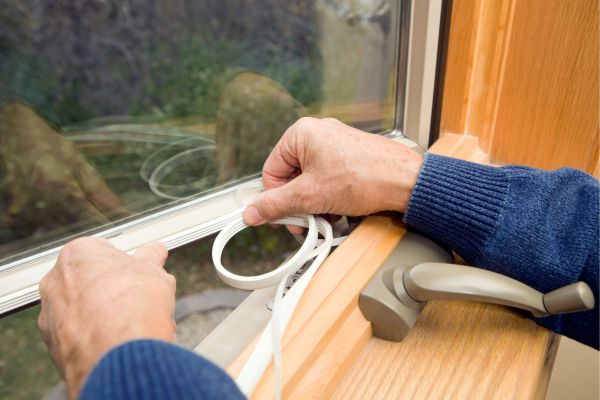
Weather stripping is typically a flexible product designed to fill in gaps around window openings. This could include anywhere that moving parts of the window are in contact with the frame. Foam, rubber, and vinyl tape are common types of weather stripping you can easily apply.
What about leaks along the edges of glass? You should address these with suitable caulking material. You’ll need a caulking gun and weatherproof silicone or silicone-latex caulk. Apply a bead to any window seams with leaks.
You can also apply caulk around framing, but once it dries, it is permanent. Do not use it on moving parts.
If you want to know how to seal drafty windows with caulk and weather stripping, there are many tutorials online.
 Add Window Film
Window film is a bit like a storm window in that it’s designed to trap air for extra insulation.
How do you fix drafty windows using window film? This product usually comes in a kit with plastic sheeting and adhesive, such as double-sided tape.
First, you trim the plastic to size and apply it around the window interior. Next, apply heat with a hair dryer to shrink the plastic and create a tight seal. You can’t open windows after installation, so this is a seasonal fix. You’ll remove it in the spring and reapply every winter.
Unfortunately, there are some downsides. You must install window film before the weather gets too cold or damp. Otherwise, you could struggle with adhesion, making it challenging to apply.
Also, window film is a bit of an eyesore. This is especially true if moisture is trapped inside. It could create condensation that impacts your view. Even worse, it may promote mold growth and wood rot. This is potentially problematic for indoor air quality, as well.
Install Storm Windows
Consider this the upgraded version of window film. Instead of plastic, you’ll install a second set of seasonal windows on the exterior of your home. However, they are reusable. You’ll swap them out for window screens in the spring and reinstall them each fall.
Storm windows are more expensive, but you’ll get your money’s worth. These insulated windows create a seal that traps air between the interior and exterior glass. In other words, you enjoy an extra layer of insulation for the areas most vulnerable to leaks.
Upgrade to Double-Paned Windows
This is the gold standard for eliminating leaks and maximizing insulation. Maybe you want to upgrade a massive picture window that always feels cold, or perhaps you’re ready to address all the outdated and inadequate windows in your home.
Either way, double-paned windows offer the same benefits as storm windows or other insulating options. However, you’ll enjoy greater function and style, without the hassle of seasonal installation. Look for Energy Star-certified windows to ensure the greatest comfort and utility savings.
How to Fix a Drafty Door
Addressing window drafts can be an intensive process, but you’re not done yet. If you don’t follow up by dealing with door drafts, you won’t enjoy the full benefits of window upgrades.
How do you fix a drafty door? If air is leaking in around the bottom of the door, address the issue with a simple draft stopper. Or install a rubber door sweep for a more permanent solution. Leaks around the perimeter of the door could benefit from the application of weather stripping.
However, if you have a builder-grade, hollow-core door, an upgrade is probably in order. Consider a solid entry door that offers improved insulation. This is the best way to get the full benefit from installing energy-efficient windows.
Don’t Let Drafts Get You Down
Drafts around windows and doors are more than just a nuisance. They rob you of comfort in your home and increase costs for heating and cooling.
How do you fix a drafty window and regain control of your home interior? With proper testing and the right upgrades, your home can stay cozy year-round.
The experienced team at Your Window Solutions is happy to help you with any window and door concerns. Contact us today to learn more!